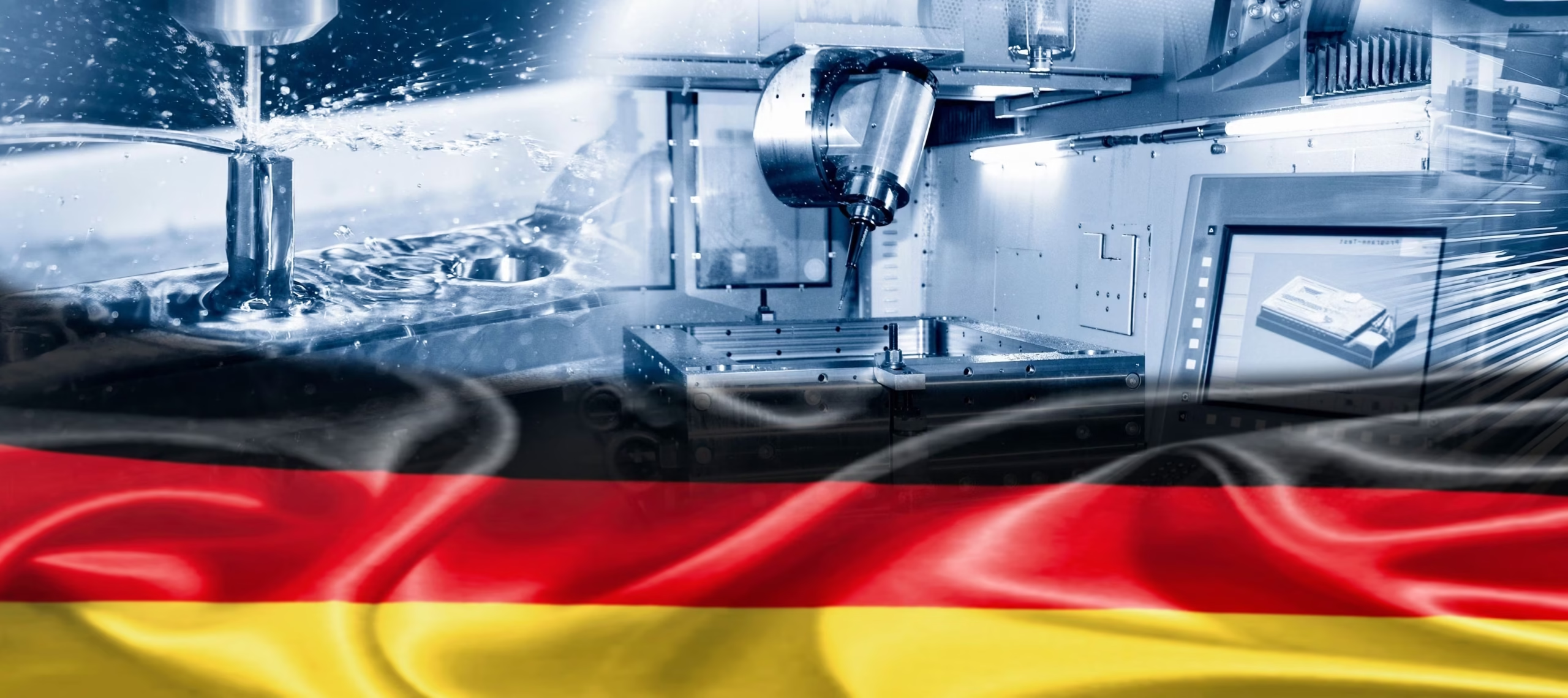
In today’s interconnected industrial economy, Germany remains one of the world’s leading manufacturing and engineering powerhouses. From automotive production and industrial automation to precision engineering and advanced machinery, German companies and German-speaking business partners play a vital role in global supply chains. For professionals working in manufacturing and engineering, mastering Business German is no longer […]
In today’s interconnected industrial economy, Germany remains one of the world’s leading manufacturing and engineering powerhouses. From automotive production and industrial automation to precision engineering and advanced machinery, German companies and German-speaking business partners play a vital role in global supply chains. For professionals working in manufacturing and engineering, mastering Business German is no longer just an advantage—it is a strategic career asset.
Whether your organisation collaborates with German suppliers, serves German-speaking clients, manages international projects, or operates facilities across Europe, effective communication can significantly improve productivity, collaboration, and business outcomes.
At Lingua Learn Malta, we help professionals develop industry-specific German language skills through flexible online corporate language training programmes designed for modern manufacturing and engineering environments.
Germany is Europe’s largest economy and a global leader in engineering innovation. Major sectors including automotive manufacturing, mechanical engineering, industrial technology, renewable energy, and advanced manufacturing rely heavily on international collaboration. According to the VDMA – German Mechanical Engineering Industry Association, Germany’s mechanical engineering sector remains one of the country’s most important industrial industries and a major contributor to global manufacturing excellence.
Professionals who can communicate confidently in German benefit from:
As global competition intensifies, organisations increasingly recognise language skills as a key component of operational excellence and international business success.
Many manufacturing and engineering companies work closely with stakeholders in Germany, Austria, and Switzerland. These partnerships often involve:
While English is commonly used in international business, the ability to communicate in German often strengthens trust, improves collaboration, and demonstrates commitment to long-term partnerships.
For engineers, project managers, procurement specialists, quality managers, and operations leaders, Business German can become a powerful competitive advantage.
Manufacturing and engineering professionals frequently encounter specialised terminology that differs significantly from everyday language.
A targeted Business German programme focuses on vocabulary related to:
Learning relevant technical language enables professionals to communicate more accurately and reduce misunderstandings in complex industrial environments.
Successful manufacturing operations depend on clear and precise communication.
Business German training helps learners develop confidence in:
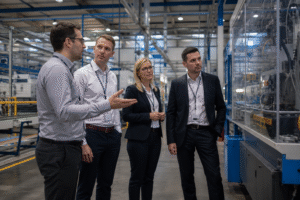
Factory visits and international collaboration make Business German an increasingly valuable skill for manufacturing and engineering professionals.
These practical skills can be applied immediately in real workplace situations.
Engineering and manufacturing environments involve extensive documentation, including:
Professionals with German language skills can interpret these materials more effectively, improving efficiency and reducing reliance on translations.
Language learning also enhances cultural understanding.
German business culture often places significant emphasis on:
Understanding these cultural dimensions helps professionals build stronger working relationships and navigate international business interactions more successfully.
Procurement professionals often interact with German-speaking suppliers regarding:
Business German skills enable more productive conversations and stronger supplier partnerships.
International engineering projects frequently involve teams located across multiple countries. Information from Germany Trade & Invest (GTAI) highlights the country’s strong industrial base, advanced infrastructure, and leadership in innovation-driven manufacturing.
German language proficiency supports:
Clear communication contributes to smoother project execution and improved outcomes.
Professionals visiting manufacturing facilities in German-speaking regions benefit greatly from practical language skills.
Key interactions may include:
The ability to communicate directly often leads to greater engagement and more productive site visits.
Quality professionals regularly communicate about:
Industry-specific language training ensures accuracy when discussing critical quality-related topics.
Clear communication reduces delays, misunderstandings, and errors that can impact manufacturing performance.
Teams equipped with German language skills often experience:
Language training is a valuable investment in workforce development.
Employees gain:
Organisations that invest in learning and development often benefit from higher employee retention and performance.
Building trust is essential in manufacturing and engineering partnerships.
Communicating in a client’s or supplier’s native language demonstrates professionalism, commitment, and cultural awareness. This can strengthen business relationships and create opportunities for long-term collaboration.
Companies operating internationally need every possible advantage.
Business German training can support:
Organisations with multilingual teams are often better positioned to compete in international markets.
Lingua Learn Malta specialises in delivering flexible online language training designed around real business needs.
Our Business German programmes for manufacturing and engineering professionals include:
Training focuses on practical workplace language used in engineering, manufacturing, operations, procurement, and technical environments.
Our instructors understand professional communication requirements and adapt lessons to learners’ roles, objectives, and industry contexts.
Busy professionals can access training from anywhere through live online classes that fit around work schedules and operational demands.
We work with organisations to create tailored learning programmes aligned with specific business goals, industry requirements, and employee development plans.
Structured programmes help learners build practical language skills progressively, enabling them to communicate more confidently and effectively in professional situations.
The manufacturing and engineering sectors continue to evolve through digital transformation, international collaboration, and technological innovation. As organisations expand across borders and strengthen global partnerships, multilingual communication skills are becoming increasingly valuable.
Business German training equips professionals with the language and cultural competencies needed to succeed in international industrial environments. From technical discussions and project management to supplier negotiations and factory visits, strong communication skills can enhance both individual performance and organisational success.
Whether you are an engineer, operations manager, procurement specialist, project leader, or manufacturing professional, developing Business German skills can unlock new opportunities and strengthen your organisation’s global capabilities.
Lingua Learn Malta offers expert-led online corporate language training designed to help manufacturing and engineering professionals communicate with confidence in German-speaking business environments.
Contact Lingua Learn Malta today to discover how customised Business German training can support your workforce development goals and international business success.